Balancing Act: Physical Therapy for Parents with Back and Hip Pain
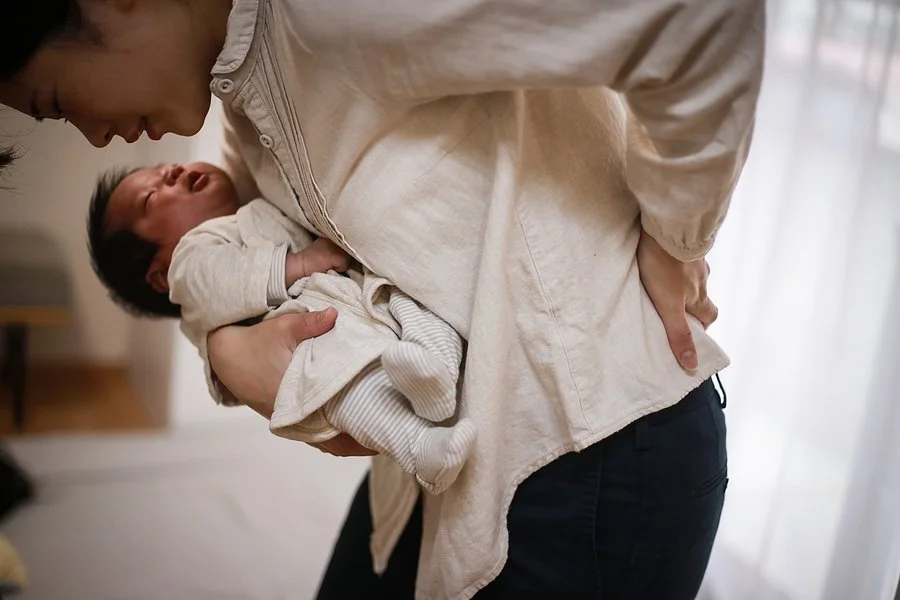
There’s a particular kind of strength that comes with parenting.
It may begin with lifting car seats and carrying toddlers, but it doesn’t end there. As children grow, the physical demands simply shift—hauling sports equipment, sitting on bleachers for hours, helping a teenager move furniture, traveling for tournaments, or squeezing in your own workouts between long workdays and family schedules.
Parenting places repetitive, often asymmetrical physical demands on the body, which can contribute to back, hip, and shoulder pain over time.
Many of the parents we work with at A Life in Balance Wellness Center are active and motivated. They value exercise. They want to stay strong for the long haul. Some are navigating the postpartum period, while others are years removed from that stage but still feeling the physical effects of daily demands.
Interestingly, it is often not a formal workout that leads to discomfort. More often, it is the steady repetition of everyday movements.
How Parenting-Related Back and Hip Pain Develops
Throughout the day, you may be carrying uneven loads, twisting into a car trunk, standing for long stretches at events, or sitting longer than intended while driving or working. None of these activities are especially harmful in isolation. However, when they are repeated consistently—especially without much recovery—they can gradually contribute to lower back pain, hip tension, neck strain, or shoulder discomfort.
Parenting-related discomfort is more common than many people realize. A recent survey of more than 1,000 parents with children ranging from newborn to 17 years old found that 65 percent reported experiencing pain related to parenting, with nearly half saying they felt that pain on a weekly or even daily basis. While the demands may look different depending on the age of your children, the physical strain is real across stages.
What we tend to see clinically is not one dramatic injury, but rather a gradual buildup of strain combined with subtle movement imbalances—especially in the hips, core, and lower back.
Building Strength That Reflects Real Life
Staying active is important. At the same time, the type of strength you build plays a significant role in how well your body handles the daily demands of parenting.
For parent athletes, strength training is most effective when it mirrors real-life movement patterns rather than isolated exercises. This often includes:
Hip hinge mechanics to reduce unnecessary stress on the lower back
Single-leg strength to support balance and pelvic stability
Rotational control to better manage twisting and reaching
Core endurance to support longer periods of standing or carrying
These aren’t flashy concepts, but they are foundational. When your body distributes load more evenly, everyday tasks tend to feel less taxing—and your workouts feel more efficient as a result.
Small adjustments outside the gym matter just as much. Alternating sides when carrying heavier items, positioning yourself closer before lifting, and taking brief posture resets during long events can reduce cumulative strain. Adding mobility work for the hips and mid-back helps ensure that your spine is not absorbing stress that other joints are designed to share.
If you’re looking for additional ways to build resilience into your routine, you may also want to consider Injury Prevention, where we focus on long-term movement resilience for active individuals and families.
The Role of the Core Across Every Stage of Parenting
Core strength is foundational throughout every season of parenting. It is not simply about visible abdominal muscles, but about coordination between the diaphragm, deep abdominal muscles, spinal stabilizers, and pelvic floor.
When this system functions efficiently, movement feels supported and controlled. When it does not, other areas often compensate—contributing to back pain, hip discomfort, or a sense of instability during exercise.
For some parents—particularly in the postpartum period—this may include pelvic floor symptoms such as leaking or pressure. For others, it may present as persistent back fatigue or recurring tightness despite consistent workouts. While these experiences are common, they are not something you have to simply accept.
Pelvic floor physical therapy and targeted core retraining can significantly improve parenting-related pain and restore confidence in movement.
Physical Therapy for Parents in Flemington, NJ and Stratton, VT
Parenting is not a short phase. It is a long season with evolving physical demands.
Physical therapy offers an opportunity to evaluate how you move within the context of your real life—how you lift, carry, sit, rotate, and recover. The goal is not to limit activity, but to build capacity so that your body can continue to support everything you value.
At A Life in Balance Wellness Center, we work with parents at every stage—whether you are local to Flemington, NJ, or connecting with us in Stratton, VT. Our approach is individualized and designed with long-term sustainability in mind.
If you’ve been experiencing back pain from lifting children, hip pain from carrying kids, or core instability that hasn’t improved with exercise alone, scheduling a movement assessment can be the first step toward feeling steadier and stronger.
We would be happy to help you build a plan that supports the long season ahead.
Frequently Asked Questions
Is it normal to have back pain from lifting children?
Back pain from lifting children is common, but it often indicates movement imbalances or strength deficits that can be improved with proper mechanics and targeted strengthening.
Can physical therapy help with parenting-related hip pain?
Yes. Physical therapy can identify contributing factors such as asymmetrical loading, core weakness, or hip instability and create a personalized plan to reduce strain.
Do dads experience parenting-related back pain, too?
Absolutely. Parenting-related musculoskeletal strain affects both mothers and fathers, particularly with repetitive lifting, carrying, and prolonged standing.
When should I see a physical therapist for parenting-related pain?
If discomfort is persistent, recurring, or limiting your activity level, an assessment at A Life In Balance can help address the underlying cause before it progresses.